The Twelve Meridians and Their Corresponding Times: The Human Body’s Natural Pharmacy Worth Millions
The Twelve Meridians and Their Corresponding Times: The Human Body's Natural Pharmacy Worth Millions

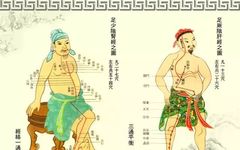
The meridians are the natural pharmacy of the human body, and to control this divine treasure, it is sufficient to understand the operational principles of the twelve meridians. This is the essence of the entire meridian theory in Traditional Chinese Medicine (TCM). There are over three hundred acupuncture points on the twelve meridians, and it … Read more
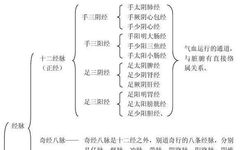
The Twelve Meridians in Traditional Chinese Medicine

The Twelve Meridians in Traditional Chinese Medicine

【Traditional Chinese Medicine App】Read classic TCM books online/offline >>> The Twelve Meridians The Twelve Meridians, a classification of meridians, refers to the twelve primary meridians and their collaterals. In the “Lingshu: Ben Shu”, it states: “In acupuncture, one must connect to the beginning and end of the twelve meridians.” The twelve primary meridians are the … Read more

What Are the “Twelve Meridians” in Traditional Chinese Medicine?

Origin of Meridians The theory of meridians is one of the core foundations of traditional Chinese medicine (TCM). The earliest documented references can be traced back to the “Pulse Book” unearthed from the Mawangdui tombs, which mentions “pulse” in the context of the “Eleven Meridians of the Feet and Arms” and the “Eleven Yin and … Read more

Understanding the Twelve Meridians in Traditional Chinese Medicine

Understanding the Twelve Meridians in Traditional Chinese Medicine

1. The Theory of Meridians explains the concept of meridians in the human body, the composition of the meridian system, its distribution, physiological functions, pathological changes, and its relationship with the organs, body structures, and Qi dynamics. This theory is a crucial component of the TCM theoretical system. 2. Meridians refer to the general term … Read more

Lecture on the Foundations of TCM: The Theory of Zangxiang – The Six Fu Organs 1

Lecture on the Foundations of TCM: The Theory of Zangxiang - The Six Fu Organs 1

The Six Fu organs refer to the gallbladder, stomach, small intestine, large intestine, bladder, and San Jiao (Triple Burner). Their physiological function is to “transport and transform substances,” and their physiological characteristics are “to excrete without storing” and “to be full but not overflowing.” Food enters through the esophagus into the stomach, where it is … Read more

An Overview of the Five Zang and Six Fu Organs in Traditional Chinese Medicine (Part 1)

An Overview of the Five Zang and Six Fu Organs in Traditional Chinese Medicine (Part 1)

An Overview of the Five Zang and Six Fu Organs in Traditional Chinese Medicine (Part 1) Watch the exciting content in video format Today, we will discuss the “Five Zang and Six Fu” organs. In Traditional Chinese Medicine (TCM), the five Zang organs are the liver (Gan), heart (Xin), spleen (Pi), lung (Fei), and kidney … Read more

Overview of the TCM Theory of the Five Zang and Six Fu Organs

Overview of the TCM Theory of the Five Zang and Six Fu Organs

The Five Zang and Six Fu organs refer to the five solid organs and six hollow organs within the human body. The Five Zang organs include the Xin (Heart), Gan (Liver), Pi (Spleen), Fei (Lungs), and Shen (Kidneys), while the Six Fu organs include the Wei (Stomach), Da Chang (Large Intestine), Xiao Chang (Small Intestine), … Read more

Traditional Chinese Medicine Thinking: What is the Theory of the Five Organs and the Five Spirits?

Traditional Chinese Medicine Thinking: What is the Theory of the Five Organs and the Five Spirits?

Traditional Chinese Medicine (TCM) believes that the five organs house the five spirits, and eating is akin to offering sacrifices to our “five organ spirits”. But do you know why the “five organs” are referred to as “temples”? The concept of the five organs housing spirits may seem mystical, yet it is grounded in evidence. … Read more

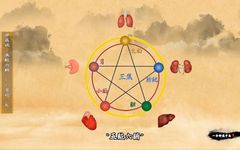
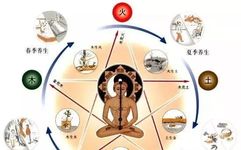
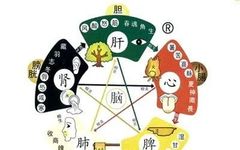
Five Elements (Five Organs) System Diagram

Five Elements (Five Organs) System Diagram

Five Organs: Liver (Gan) · Heart (Xin) · Spleen (Pi) · Lung (Fei) · Kidney (Shen) are the solid organs of the human body, responsible for the transformation and storage of the body’s essence. Six Bowels: Gallbladder (Dan) · Small Intestine (Xiao Chang) · Stomach (Wei) · Large Intestine (Da Chang) · Bladder (Pang Guo) … Read more

The Five Organs and Six Bowels in Traditional Chinese Medicine

The Five Organs and Six Bowels in Traditional Chinese Medicine

The Five Organs The Five Organs refer to the heart, liver, spleen, lungs, and kidneys. In TCM theory, the Five Organs are the center of life activities in the human body, with mental and conscious activities belonging to the Five Organs. Together with the Six Bowels, they connect the body’s internal and external organs, forming … Read more