Dang Gui Si Ni Tang
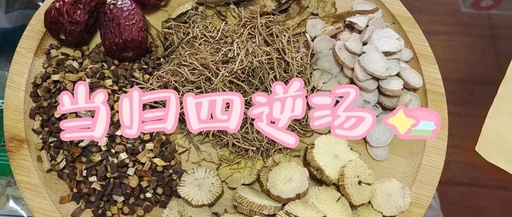
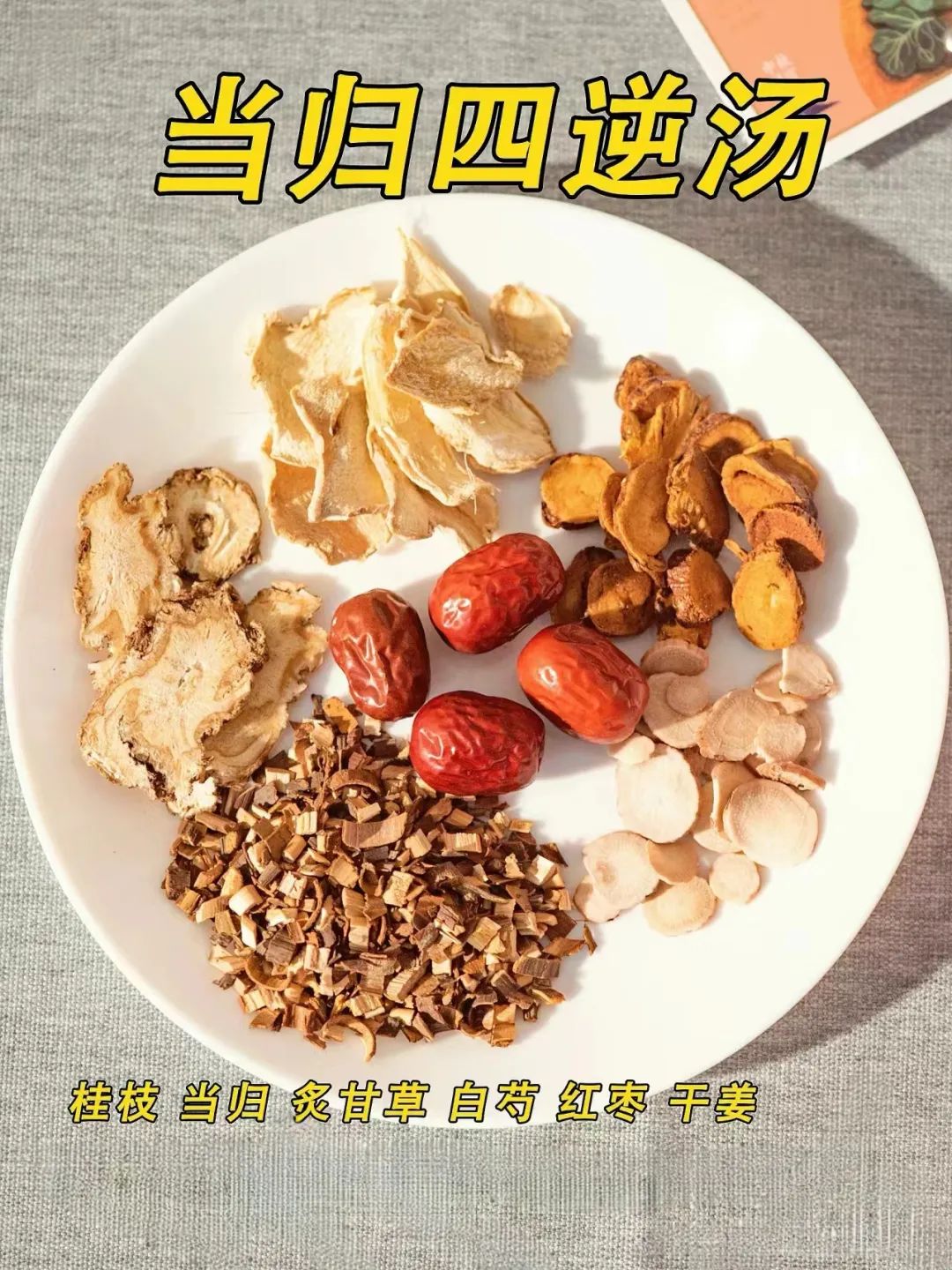
Dang Gui (Angelica Sinensis) 3 liang Gui Zhi (Cinnamon Twig) 3 liang Shao Yao (Peony) 3 liang Xi Xin (Asarum) 3 liang Da Zao (Jujube) 25 pieces Gan Cao (Licorice) 2 liang roasted Tong Cao (Reed Rhizome) 2 liang Combine the seven ingredients, add 8 sheng of water, boil down to 3 sheng, strain, and take 1 sheng warm, three times a day.
【Modern Dosage Conversion】
Dang Gui15g Gui Zhi15g Shao Yao15g Xi Xin15g Da Zao 25 pieces roastedGan Cao10g Tong Cao 10-15g
【Note】
Da Zao, one method uses twelve pieces
【Explanation】
1. Dang Gui is used for patients with cold extremities and blood loss; it replenishes the blood. Roasted Gan Cao is used to strengthen heart function.
2. Do not use Sheng Jiang (Fresh Ginger) as it disperses cold from the stomach and is ineffective for the extremities; it does not rescue from reversal.
3. Gui Zhi and Bai Shao must be in equal amounts; if Gui Zhi is less and Bai Shao is more, it may cause blood vessel rupture.
4. Xi Xin warms the Yang in the interior, allowing the Yang of the lower body to rise, promoting circulation and dispelling internal cold.
5. The Tong Cao in the formula actually refers to Mu Tong (Akebia), which helps to clear constipation; if there is diarrhea, reduce Mu Tong, and if constipation is present, increase Mu Tong.
6. For patients with hernias, add Sheng Ma (Cimicifuga) to uplift Yang Qi.
7. For patients with nausea and vomiting, add Wu Zhu Yu (Evodia) and Sheng Jiang.
《Shang Han Lun》
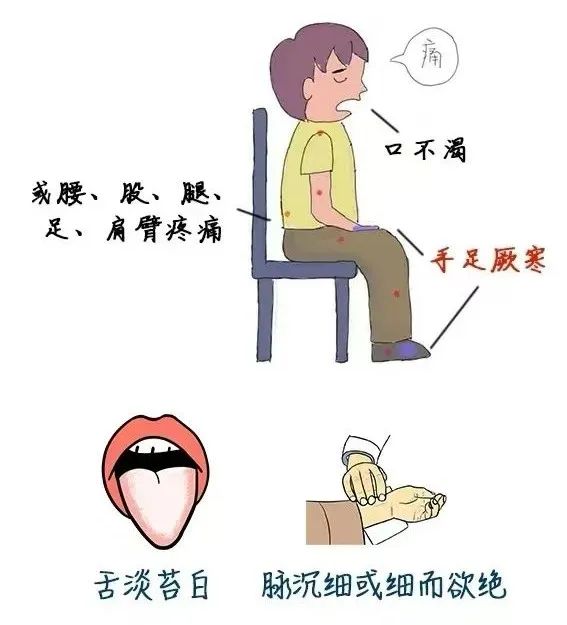
1. For cold extremities and a thin, weak pulse, Dang Gui Si Ni Tang is indicated. If the patient has long-standing internal cold, use Dang Gui Si Ni Tang with Wu Zhu Yu and Sheng Jiang.
【Application】
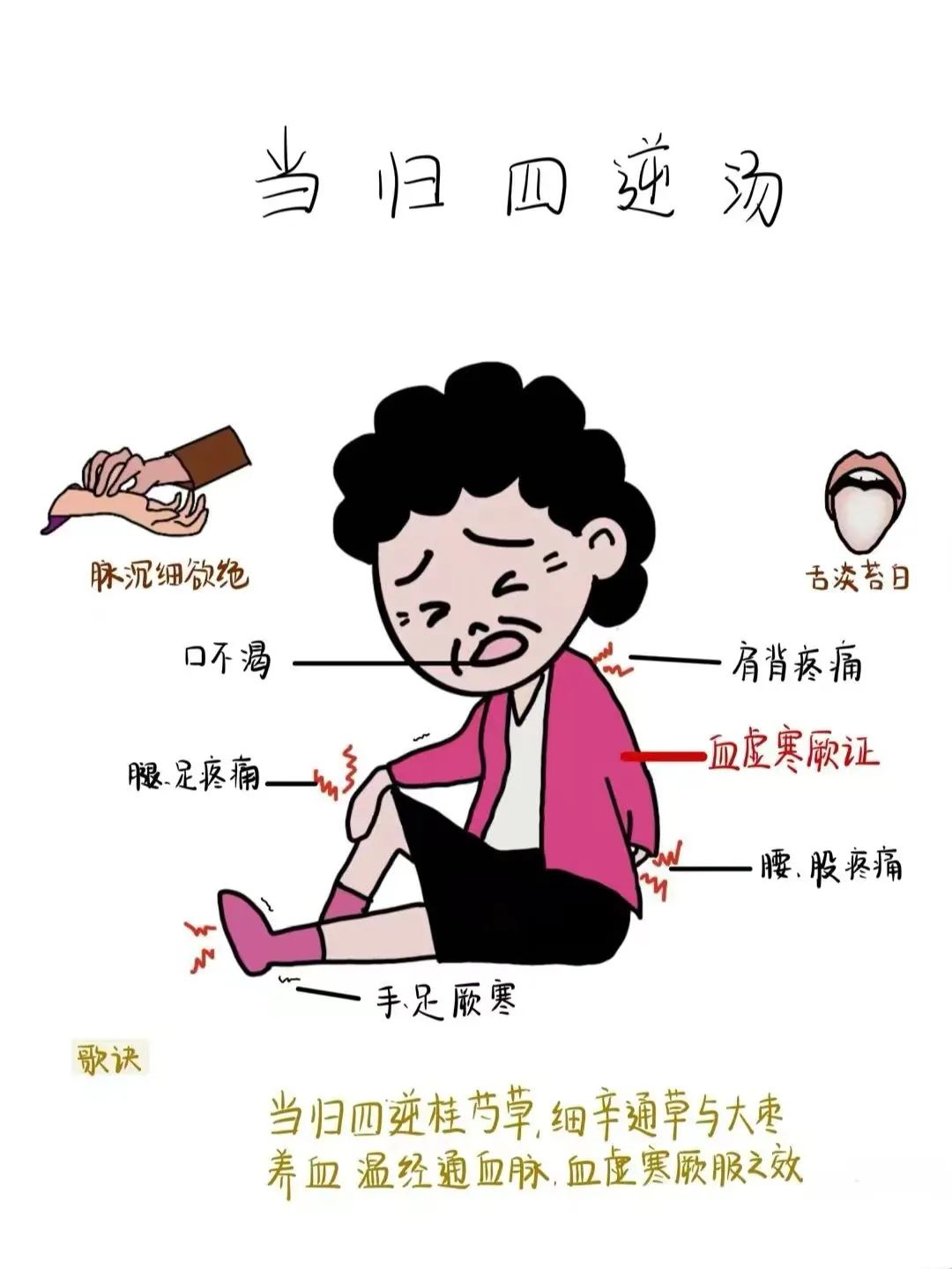
1, cold hands to the elbows, cold feet to the knees, thin pulse indicating extreme heart failure; patients in critical care relying on life support often present with Dang Gui Si Ni Tang syndrome. For ordinary patients, prescribe 3 qian; in emergencies, use 3 liang.
2. Cold caused by blood deficiency, leading to frostbite. The only prescription for frostbite is to first take Dang Gui Si Ni Tang, then apply Gan Jiang (Dried Ginger) and Fu Zi (Aconite) powder externally.
3. In late-stage diabetes, when amputation is necessary, Dang Gui Si Ni Tang is also indicated. For foot ulcers, soak in sugarcane water and apply powdered Zhi Mu (Anemarrhena) and Huang Lian (Coptis) for regeneration of necrotic tissue.
4. Women with excessive leukorrhea and cold extremities, delayed menstruation due to cold obstruction, can use Dang Gui Si Ni Tang with modifications.
5. Cold feet at night indicate Dang Gui Si Ni Tang syndrome.
6. For intestinal prolapse or hernias, use Dang Gui Si Ni Tang with Sheng Ma.
7. In clinical cases of blood cancer, lupus erythematosus, and uremia, Dang Gui Si Ni Tang is often used with modifications.
8. Right lower abdomen and waist pain, cold extremities, weak pulse, and irregular bowel movements indicate Dang Gui Si Ni Tang syndrome.
9. For Raynaud’s disease, increase the dosage of Dang Gui Si Ni Tang. If the toes and fingernails are cyanotic, it is considered an immune disorder by Western medicine.
10. For half-body cold: left indicates blood, right indicates Qi. Left cold indicates blood cold, use Dang Gui Si Ni Tang for blood issues; if right cold, use Huang Qi (Astragalus) based formulas for Qi issues; if both sides are cold, use Si Ni Tang.